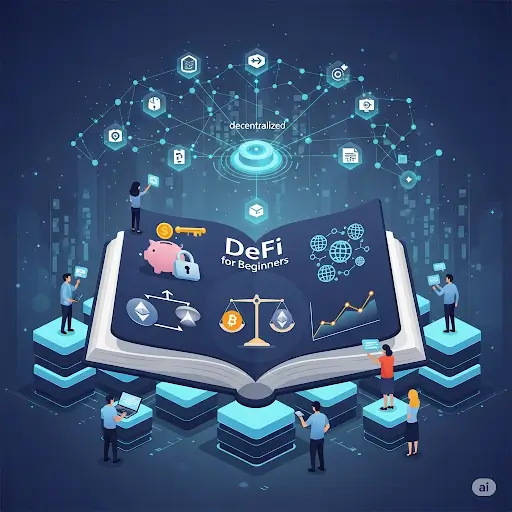

The decentralized finance revolution is reshaping how we think about money, banking, and financial services. What started as an experimental movement has grown into a multi-billion dollar ecosystem that challenges traditional financial institutions at their core.
DeFi tokens sit at the heart of this transformation, powering everything from lending protocols to decentralized exchanges. But for newcomers to the crypto space, understanding these digital assets can feel overwhelming. What exactly are DeFi tokens? How do they work? And most importantly, what should beginners know before diving into this exciting but complex world?
This comprehensive guide breaks down everything you need to know about DeFi tokens in 2025. We’ll explore the different types of tokens, examine their real-world applications, and provide practical advice for getting started safely. By the end, you’ll have a solid foundation for navigating the DeFi landscape with confidence.
What Are DeFi Tokens?
DeFi tokens are digital assets that power decentralized finance applications and protocols. Unlike traditional cryptocurrencies that primarily serve as digital money, DeFi tokens have specific utility within their respective ecosystems. They enable users to access services, participate in governance decisions, and earn rewards through various financial activities.
These tokens operate on blockchain networks, most commonly Ethereum, though other platforms like Binance Smart Chain, Solana, and Polygon have gained significant traction. Smart contracts govern their behavior, executing predetermined rules without requiring intermediaries like banks or financial institutions.
The core innovation of DeFi tokens lies in their programmability. Developers can embed complex financial logic directly into the token’s code, creating sophisticated instruments that automatically handle tasks like interest calculations, collateral management, and reward distributions. This automation reduces costs, increases transparency, and opens up financial services to anyone with an internet connection.
Think of DeFi tokens as the building blocks of a new financial system. Just as traditional finance relies on stocks, bonds, and currencies, DeFi uses tokens to represent ownership, debt, rewards, and voting rights across its various protocols and applications.
Types of DeFi Tokens
Understanding the different categories of DeFi tokens is crucial for navigating this space effectively. Each type serves distinct purposes and offers unique value propositions to users.
Governance Tokens
Governance tokens grant holders voting rights within DeFi protocols. These tokens democratize decision-making by allowing community members to propose and vote on important changes to the protocol, such as fee structures, new features, or treasury allocation.
Popular governance tokens include UNI (Uniswap), AAVE (Aave), and COMP (Compound). Holders of these tokens can participate in governance proposals that shape the future direction of these platforms. The more tokens you hold, the greater your voting power, though many protocols implement measures to prevent excessive centralization.
Beyond voting rights, governance tokens often provide holders with additional benefits. Some protocols distribute a portion of their revenue to token holders, creating an incentive for long-term participation. Others offer reduced fees or priority access to new features for token holders.
Utility Tokens
Utility tokens provide access to specific services or features within DeFi protocols. These tokens are often required to use platform functionalities, pay transaction fees, or unlock premium features. Unlike governance tokens, utility tokens focus on enabling practical use cases rather than protocol governance.
Examples include BNB (Binance Smart Chain), which users need for transaction fees on the Binance Smart Chain network, and LINK (Chainlink), which powers Chainlink’s oracle services that provide real-world data to smart contracts. Platform-specific utility tokens might grant access to advanced trading features, reduced fees, or exclusive investment opportunities.
The value of utility tokens often correlates with the adoption and usage of their underlying platforms. As more users engage with a protocol’s services, demand for its utility token typically increases, potentially driving up its price.
Security Tokens
Security tokens represent ownership in real-world assets or provide claims to future cash flows. In the DeFi context, these tokens often represent shares in investment funds, revenue-sharing agreements, or tokenized versions of traditional securities.
While less common than governance and utility tokens due to regulatory complexity, security tokens are gaining traction as the regulatory landscape becomes clearer. They bridge traditional finance and DeFi by bringing familiar investment structures onto blockchain networks.
Security tokens must typically comply with securities regulations in their respective jurisdictions, which can limit their availability to certain types of investors or geographic regions. However, they offer the potential for 24/7 trading, programmable compliance, and reduced settlement times compared to traditional securities.
Key Benefits of Investing in DeFi Tokens
DeFi tokens offer several compelling advantages that attract investors and users to the ecosystem.
Accessibility and Inclusivity
Traditional financial services often exclude large portions of the global population due to geographic restrictions, minimum investment requirements, or lack of proper documentation. DeFi tokens eliminate many of these barriers, allowing anyone with an internet connection and a digital wallet to participate in sophisticated financial services.
This accessibility extends beyond individual users to entire regions where traditional banking infrastructure is limited. DeFi tokens enable people in developing countries to access lending, borrowing, and investment opportunities that were previously unavailable to them.
High Yield Potential
Many DeFi protocols offer attractive yields through various mechanisms like liquidity mining, staking rewards, and lending protocols. These yields often exceed what traditional savings accounts or bonds provide, though they come with correspondingly higher risks.
Yield farming, where users provide liquidity to decentralized exchanges or lending protocols in exchange for token rewards, has become particularly popular. While yields can be substantial, they’re often variable and depend on factors like protocol adoption, token prices, and market conditions.
Innovation and Early Adoption Opportunities
The DeFi space moves quickly, with new protocols and innovative financial instruments launching regularly. Early adopters of promising DeFi tokens have the potential to benefit significantly as these protocols gain adoption and mature.
This innovation extends to entirely new financial primitives that don’t exist in traditional finance. Concepts like flash loans, automated market makers, and synthetic assets offer novel ways to interact with financial markets and generate returns.
Transparency and Control
All DeFi transactions occur on public blockchains, providing unprecedented transparency into protocol operations, treasury management, and token economics. Users can verify how their funds are being used and track the performance of protocols in real-time.
Additionally, DeFi tokens often give users more control over their financial activities. Smart contracts execute automatically according to predefined rules, reducing counterparty risk and eliminating the need to trust centralized intermediaries.
Risks and Challenges of DeFi Tokens
While DeFi tokens offer exciting opportunities, they also come with significant risks that potential investors must understand.
Smart Contract Vulnerabilities
Smart contracts power DeFi protocols, but they’re not immune to bugs or security flaws. High-profile hacks have resulted in millions of dollars in losses, highlighting the importance of thorough code audits and security reviews.
Even audited protocols can have vulnerabilities that only become apparent after deployment. The immutable nature of blockchain means that fixing these issues often requires complex upgrade mechanisms or, in worst cases, complete protocol migrations.
Regulatory Uncertainty
The regulatory landscape for DeFi tokens remains unclear in many jurisdictions. Government agencies worldwide are still developing frameworks for how these assets should be classified and regulated. Future regulatory changes could significantly impact token values and the ability to use certain DeFi services.
Some tokens may be classified as securities in certain jurisdictions, subjecting them to additional compliance requirements or restricting their availability to retail investors. The evolving regulatory environment creates ongoing uncertainty for DeFi participants.
Market Volatility
DeFi tokens often exhibit high price volatility, with values capable of swinging dramatically in short periods. This volatility can amplify both gains and losses, making position sizing and risk management crucial for investors.
The relatively small market capitalization of many DeFi tokens compared to established cryptocurrencies like Bitcoin and Ethereum can contribute to this volatility. Large trades can significantly impact token prices, and market sentiment can shift rapidly based on protocol developments or broader crypto market conditions.
Impermanent Loss
Users who provide liquidity to decentralized exchanges or automated market makers face the risk of impermanent loss. This occurs when the price ratio of deposited tokens changes, potentially leaving liquidity providers with less value than if they had simply held the tokens.
While liquidity mining rewards often compensate for impermanent loss, this isn’t always the case, especially during periods of high volatility or when reward programs end.
How to Buy and Store DeFi Tokens
Getting started with DeFi tokens requires several steps and careful attention to security practices.
Choosing a Wallet
The first step is selecting a cryptocurrency wallet that supports DeFi tokens and interactions with decentralized applications. Popular options include MetaMask, Trust Wallet, and hardware wallets like Ledger and Trezor.
Software wallets offer convenience for frequent trading and DeFi interactions, while hardware wallets provide superior security for long-term storage. Many users employ a combination approach, using software wallets for active trading and hardware wallets for larger holdings.
Acquiring Base Cryptocurrencies
Most DeFi tokens can’t be purchased directly with fiat currency. Users typically need to first buy established cryptocurrencies like Ethereum or Bitcoin from centralized exchanges like Coinbase, Binance, or Kraken, then trade these for DeFi tokens on decentralized exchanges.
Using Decentralized Exchanges
Decentralized exchanges (DEXs) like Uniswap, SushiSwap, and PancakeSwap facilitate trading between different tokens without requiring traditional order books or centralized custody. These platforms use automated market makers to provide liquidity and determine prices.
When using DEXs, users must pay network transaction fees (called gas fees on Ethereum) and should be aware of slippage, which occurs when the execution price differs from the expected price due to market movements or low liquidity.
Security Best Practices
Storing DeFi tokens safely requires following established security practices. This includes using strong, unique passwords, enabling two-factor authentication where available, keeping private keys secure, and being cautious of phishing attempts.
Users should also verify contract addresses when interacting with DeFi protocols and be wary of new or unaudited projects that might be scams or have security vulnerabilities.
DeFi Trends to Watch in 2025
Several key trends are likely to shape the DeFi token landscape throughout 2025.
Layer 2 Solutions and Multi-Chain Expansion
High transaction fees on Ethereum have driven significant innovation in layer 2 scaling solutions and alternative blockchain networks. Tokens associated with successful scaling solutions like Arbitrum, Optimism, and Polygon are likely to see continued adoption.
Cross-chain bridges and multi-chain protocols that allow assets to move between different blockchain networks are becoming increasingly important as the ecosystem fragments across multiple chains.
Real-World Asset Tokenization
The tokenization of real-world assets like real estate, commodities, and traditional securities is gaining momentum. This trend bridges traditional finance and DeFi, potentially bringing trillions of dollars in assets onto blockchain networks.
Protocols focusing on real-world asset tokenization may see significant growth as regulatory frameworks become clearer and institutional adoption increases.
Institutional DeFi Adoption
Traditional financial institutions are beginning to explore DeFi protocols and tokens. This institutional adoption could bring significant capital and legitimacy to the space, though it may also lead to increased regulation and compliance requirements.
Tokens associated with protocols that successfully cater to institutional needs while maintaining their decentralized ethos are well-positioned for growth.
Sustainability and Energy Efficiency
Environmental concerns around blockchain energy consumption are driving innovation in more sustainable consensus mechanisms and carbon-neutral protocols. Tokens associated with environmentally friendly blockchains and protocols may benefit from increased ESG-focused investment.
The Road Ahead for DeFi Tokens
DeFi tokens represent a fundamental shift in how we think about and interact with financial services. While the space remains young and volatile, the underlying innovation continues to mature and attract both users and investment.
Success in the DeFi token space requires education, careful risk management, and a long-term perspective. The protocols and tokens that survive and thrive will likely be those that solve real problems, maintain strong security practices, and adapt to evolving regulatory requirements.
For beginners, the key is to start small, learn continuously, and never invest more than you can afford to lose. The DeFi ecosystem offers tremendous opportunities for those willing to navigate its complexities, but it rewards preparation and caution over speculation and haste.
As we move through 2025, DeFi tokens will likely become increasingly integrated with traditional financial systems while maintaining the core principles of decentralization, transparency, and accessibility that make them revolutionary. The future of finance is being built today, one token at a time.