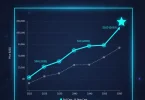
The digital art revolution has reached unprecedented heights, with non-fungible tokens transforming how we perceive ownership and value in the virtual realm. What started as a niche technology has exploded into a multi-billion dollar market, where digital creations command prices that rival traditional masterpieces. The astronomical figures attached to the most expensive NFT sales reveal a fundamental shift in collecting culture, where blockchain technology meets artistic expression to create entirely new forms of cultural artifacts.
These record-breaking transactions represent more than mere financial speculation—they showcase the power of digital scarcity, artistic innovation, and community engagement in ways previously impossible. From collaborative artworks that unite thousands of collectors to dynamic pieces that evolve over time, the highest-priced NFTs have redefined what it means to own and experience art.
The stories behind these sales illuminate the diverse motivations driving the NFT market: artistic patronage, technological advocacy, social activism, and pure investment speculation. Each transaction has contributed to building the infrastructure and cultural legitimacy that continues to attract both seasoned art collectors and crypto-native investors to this emerging space.
Understanding NFT Value: What Makes Digital Art Worth Millions
Before examining the record-breaking sales, it’s essential to understand the factors that drive NFT valuations to extraordinary heights. Unlike traditional art, where physical rarity and historical provenance determine value, NFTs derive their worth from a complex interplay of technological innovation, cultural significance, and market dynamics.
Scarcity and Uniqueness play fundamental roles, with limited editions and one-of-one pieces commanding premium prices. The blockchain provides immutable proof of ownership and authenticity, eliminating concerns about forgery that plague traditional art markets.
Artist Reputation and Innovation significantly influence pricing, particularly when creators push boundaries by combining digital and physical elements or introducing novel interactive features. Artists who gain early recognition in the NFT space often see their entire collections appreciate dramatically.
Community and Cultural Impact cannot be overlooked, as many high-value NFTs become symbols representing broader movements within crypto culture, digital rights advocacy, or artistic expression. These pieces transcend individual ownership to become cultural touchstones.
Market Timing and Momentum also affect valuations, with peak crypto market conditions and mainstream media attention creating perfect storms for record-breaking sales.
The Merge by Pak: Redefining Collective Ownership at $91.8 Million
“The Merge” stands as the most expensive NFT ever sold, though its structure challenges traditional notions of singular ownership. Created by the enigmatic digital artist Pak, this groundbreaking piece employed a revolutionary sale mechanism that allowed 28,983 collectors to collectively purchase 312,686 tokens over a 48-hour period in December 2021.
The artwork itself embodied conceptual brilliance—a simple sphere that represented the ongoing merger of individual tokens into a collective whole. As buyers acquired tokens, their individual holdings would automatically merge, creating a dynamic artwork that physically changed based on ownership patterns. This innovative approach reflected Ethereum’s transition from proof-of-work to proof-of-stake consensus, making the piece both technically and conceptually relevant to blockchain evolution.
Pak’s sale strategy proved revolutionary, starting at $575 per token and increasing by $25 every six hours until reaching $750. This pricing model created urgency while allowing broader participation than traditional single-buyer auctions. The success demonstrated that NFT markets could support complex ownership structures that blur lines between individual collecting and community investment.
The cultural significance extends beyond its price tag. “The Merge” proved that digital art could command respect in traditional art circles while pioneering new models for artist-collector relationships. Its success paved the way for subsequent experimental NFT formats and established Pak as one of the most influential figures in digital art.
Beeple’s Everydays: The $69.3 Million Christie’s Breakthrough
Mike Winkelmann’s “Everydays: The First 5000 Days” marked a watershed moment when Christie’s, a 255-year-old auction house, embraced NFTs with spectacular results. The artwork, comprising 5,000 individual digital pieces created over 13+ years, sold for $69.3 million in March 2021, instantly catapulting Beeple into the ranks of the world’s most valuable living artists.
The piece documented Winkelmann’s artistic journey from 2007 to 2021, showcasing his evolution from relatively simple digital sketches to sophisticated 3D renderings and social commentary. This chronological progression created a unique narrative arc that resonated with collectors as both artistic achievement and historical documentation of digital art’s development.
Vignesh Sundaresan, purchasing under the pseudonym MetaKovan, acquired the piece using 42,329 Ether. His motivation extended beyond personal collecting—the purchase was strategically designed to bring attention to Beeple’s work and boost the value of B20 tokens, which represented fractional ownership in a collection of Beeple artworks.
The Christie’s auction legitimized NFTs in traditional art world circles, with mainstream media coverage introducing millions to the concept of digital ownership. The sale’s success encouraged other prestigious auction houses to embrace NFTs, fundamentally altering the landscape for digital art sales.
Sundaresan’s commitment to public access through virtual museum displays demonstrated how NFT ownership could coexist with broad cultural accessibility, addressing critics who argued that digital art ownership was inherently exclusionary.
Clock by Julian Assange and Pak: Art Meets Activism at $52.8 Million
The collaboration between Julian Assange and Pak produced “Clock,” an NFT that transcends traditional art categories to become a powerful statement on freedom of information and digital rights. Selling for 16,593 ETH (approximately $52.7 million), this dynamic piece features a continuously updating timer counting the days Assange has spent in prison.
AssangeDAO, a decentralized autonomous organization comprising over 10,000 supporters, collectively raised funds to acquire the artwork. This purchasing model demonstrated how NFTs could facilitate community organizing around political causes, with art serving as both cultural artifact and fundraising mechanism.
The technical execution proved elegantly simple yet conceptually profound. The timer’s relentless progression creates an evolving artwork that gains poignancy with each passing day, making the piece increasingly powerful as Assange’s legal situation continues. This temporal element distinguishes “Clock” from static artworks, creating urgency and emotional connection that deepens over time.
Proceeds from the sale directly supported Assange’s legal defense through the Wau Holland Foundation, demonstrating NFTs’ potential for combining artistic expression with direct action. The purchase price reflected not just aesthetic appreciation but collective commitment to the principles Assange represents.
The sale highlighted how high-profile collaborations between controversial figures and respected digital artists could create culturally significant works that transcend traditional art market dynamics. It established precedent for using NFT sales as vehicles for social and political advocacy.
HUMAN ONE by Beeple: Physical Meets Digital at $28.9 Million
Beeple’s “HUMAN ONE” represents a fascinating hybrid between traditional sculpture and digital art, featuring a kinetic sculpture with LED screens displaying an evolving figure navigating various virtual landscapes. The piece sold for $28.9 million at Christie’s 21st Century Evening Sale, purchased by Swiss venture capitalist Ryan Zurrer.
The artwork’s revolutionary aspect lies in its perpetual evolution. Beeple retains the ability to update the digital content throughout his lifetime, meaning the piece will continuously transform, potentially for decades. This creates unprecedented dynamics between artist and collector, where the artwork remains actively connected to its creator long after purchase.
The physical component consists of a seven-foot-tall structure housing four video screens that display the “traveler”—a figure in an astronaut suit moving through various digital environments. These landscapes change to reflect current events, technological developments, and Beeple’s evolving artistic vision, making each viewing experience unique.
Zurrer’s acquisition strategy extends beyond traditional collecting. As a crypto venture capitalist, he views the piece as part of a broader portfolio that includes using art as collateral for decentralized finance protocols, demonstrating how NFTs can function within sophisticated financial strategies.
The hybrid format addresses criticisms of purely digital NFTs by providing physical presence while maintaining the dynamic, updateable characteristics that make digital art unique. This approach has influenced subsequent artists to explore similar physical-digital combinations.
CryptoPunk #5822: The $23.7 Million Alien That Defined a Movement
CryptoPunk #5822, one of only nine Alien Punks in the entire 10,000-piece collection, sold for 8,000 ETH (approximately $23.7 million) to Deepak Thapliyal, CEO of Chain. This sale established a new benchmark for the CryptoPunks collection and reinforced the series’ position as the most culturally significant NFT project.
The CryptoPunks collection, created by Larva Labs in 2017, predates the modern NFT boom and holds special status as one of the earliest examples of provably scarce digital art on Ethereum. The Alien Punks, representing less than 1% of the total collection, have become the most coveted pieces due to their extreme rarity and distinctive green skin tone.
Thapliyal’s purchase reflected both personal passion and strategic business positioning. As a blockchain infrastructure CEO, owning a premier CryptoPunk demonstrated commitment to the NFT ecosystem while serving as a powerful networking and branding tool within crypto circles.
The sale significantly exceeded the previous CryptoPunk record of $11.75 million for the “COVID Alien” CryptoPunk #7523, sold at Sotheby’s in 2021. This price appreciation demonstrated the collection’s continued cultural relevance and investment potential despite market volatility.
CryptoPunks have transcended their original status as collectible art to become cultural symbols representing early adoption and success within the crypto ecosystem. Ownership signals membership in an exclusive community of digital art pioneers and blockchain advocates.
Market Forces Behind Record-Breaking NFT Sales
The astronomical prices achieved by these NFTs result from several converging factors that created perfect conditions for unprecedented valuations. Understanding these dynamics provides insight into both past sales and future market potential.
Celebrity and Influencer Involvement amplified attention and legitimacy, with high-profile purchases encouraging additional investment from both crypto-native and traditional collectors. When established figures like Christie’s or prominent CEOs participate, it signals market maturity to previously skeptical observers.
Narrative and Cultural Significance plays crucial roles, with the most expensive pieces often representing broader themes like artistic innovation, social activism, or technological progress. Buyers frequently view these purchases as supporting important cultural movements rather than simple aesthetic choices.
Technical Innovation commands premium pricing, particularly for artworks that push creative boundaries or introduce novel concepts like collective ownership, evolving content, or physical-digital hybrids. Artists who successfully integrate cutting-edge technology with compelling artistic vision achieve the highest valuations.
Market Timing cannot be underestimated, with most record sales occurring during peak crypto market conditions when Ethereum prices were elevated and overall sentiment remained bullish. The psychological impact of using ETH for purchases meant that rising cryptocurrency values directly translated to higher USD equivalents.
Community Building and Social Proof drive sustained interest, particularly for collections like CryptoPunks that develop strong cultural identities and active communities. Social media amplification and cultural cachet create positive feedback loops that support continued price appreciation.
The Future of High-Value NFT Sales
The evolution of expensive NFT sales suggests several trends that may shape future record-breaking transactions. Understanding these patterns provides insight into where the market may head as technology and cultural acceptance continue developing.
Institutional Adoption will likely drive larger transactions as museums, corporations, and investment funds begin viewing NFTs as legitimate asset classes. This institutional interest could support higher valuations and create more stable markets for premium pieces.
Technological Enhancement promises new categories of high-value NFTs as augmented reality, virtual reality, and artificial intelligence create more sophisticated interactive experiences. Artists who successfully integrate these technologies may command premium prices similar to current record holders.
Cross-Platform Integration between virtual worlds, social media, and traditional media will likely increase NFT utility and cultural significance. Pieces that function across multiple platforms and use cases may justify higher valuations than purely aesthetic works.
Regulatory Clarity in major markets could encourage broader participation from traditional art collectors and institutional investors currently hesitant about legal implications. Clearer frameworks may unlock significant capital currently waiting on the sidelines.
Lessons from Digital Art’s Most Expensive Moments
The record-breaking NFT sales examined here reveal fundamental shifts in how society values digital creativity, community participation, and technological innovation. These transactions represent more than financial speculation—they document the emergence of entirely new cultural and economic systems built on blockchain technology.
Each sale demonstrated different aspects of NFT potential: collective ownership models, artist-collector relationships that evolve over time, art as activism, and the successful integration of physical and digital elements. These innovations continue influencing how creators approach digital art and how collectors evaluate potential investments.
The success of these expensive NFTs has legitimized digital art in traditional cultural institutions while creating new pathways for artists to achieve financial success and cultural recognition. As technology continues advancing and cultural acceptance grows, the foundations laid by these record-breaking sales will likely support even more ambitious projects and higher valuations.
The intersection of art, technology, and finance that these sales represent suggests that NFTs will continue evolving beyond simple collectibles toward more sophisticated forms of cultural expression and community organization. The most expensive sales haven’t just set price records—they’ve established new paradigms for how digital culture creates and distributes value.