Cryptocurrency markets have witnessed unprecedented political influence with Donald Trump’s presidency, particularly through his family-backed World Liberty Financial (WLFI) project. Launched in September 2024, this politically charged cryptocurrency has generated significant attention among investors wondering about its future potential.
WLFI represents more than just another digital asset—it’s positioned as a bridge between traditional finance and decentralized finance (DeFi), backed by the political influence of the “Crypto President” himself. With its dollar-backed stablecoin USD1, lending platform integration with Aave V3, and ambitious roadmap, many investors are asking: can WLFI reach the coveted $1 price point in 2025?
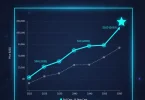
The project has already demonstrated remarkable early performance, raising $550 million in presale funding and achieving a peak price of $0.46 shortly after its token launch. However, like many cryptocurrency projects, it has faced volatility and is currently trading at $0.21. Understanding WLFI’s potential requires examining its fundamentals, market position, and the unique political factors that could drive its success or failure.
Understanding World Liberty Financial: More Than Politics
World Liberty Financial operates as a US-centric DeFi protocol with its governance token WLFI and stablecoin USD1 at its core. The project runs on multiple blockchain networks including Ethereum, BNB Chain, Tron, and Solana, emphasizing interoperability across different ecosystems.
Founded by Donald Trump and his sons Eric, Donald Jr., and Barron Trump, alongside Zach Witkoff, the project benefits from unprecedented political backing. Justin Sun, founder of the Tron network, has emerged as a vocal advocate and significant investor, contributing $75 million to the presale.
The Liberty Protocol powers the project’s core functionality, offering low-fee, low-slippage decentralized exchanges and lending platforms. Users can borrow assets using collateral or earn passive income through lending, effectively bridging blockchain technology with traditional financial services.
Built on Ethereum’s layer-2 infrastructure with Aave V3 technology, WLFI maintains a corporate structure while granting token holders voting rights on major decisions. This hybrid approach differentiates it from purely decentralized autonomous organizations (DAOs).
Key Features and Innovations
The Smart Yield Aggregator automatically identifies optimal staking and farming opportunities across various protocols, helping users maximize returns without requiring advanced technical knowledge. This feature democratizes DeFi participation for mainstream users.
WLFI is developing a mobile application designed to onboard Web2 users into the DeFi ecosystem, offering intuitive tools for staking and yield farming. The project has partnered with Chainlink for proof-of-reserves audits, enhancing transparency and trust.
The project’s stablecoin USD1 has expanded across multiple blockchains, increasing accessibility and utility. In May 2025, USD1 was utilized in a significant $2 billion MGC-Binance settlement deal, demonstrating real-world adoption and institutional recognition.
Current Market Position and Performance
WLFI’s tokenomics reveal a total supply of 100 billion tokens, with 20% released during the September 1, 2025 unlock event. This represents the first time tokens became freely tradable and transferable, marking a crucial milestone for the project.
The token achieved impressive early returns, with presale investors who purchased at $0.015 enjoying over 1,300% gains at current prices. However, the unlock process wasn’t without challenges—some Coinbase Wallet users experienced connectivity issues, and even Justin Sun’s $75 million investment wallet was temporarily frozen as a security measure.
Current WLFI Metrics:
- Market Cap: $5.36 billion
- Rank by Market Cap: #28
- Circulating Supply: 24.66 billion WLFI
- All-Time High: $0.46 (September 1, 2025)
- All-Time Low: $0.1632 (September 4, 2025)
- Current Price: $0.21
To address post-launch price volatility, WLFI implemented a $47 million governance proposal for a buyback and burn program. This mechanism uses trading fees to purchase and remove tokens from circulation, potentially creating upward price pressure while reducing oversupply concerns.
The project’s integration with Chainlink on September 1, 2025, enabled seamless cross-chain transfers between Ethereum, Tron, Solana, and BNB Chain, significantly boosting utility and liquidity potential.
WLFI Price Prediction 2025: Navigating the First Full Year
The remainder of 2025 presents a complex landscape for WLFI. The project has successfully launched its core features, including the USD1 stablecoin on Solana with loyalty programs and the “Project Wings” rewards program for traders on platforms like Bonk.fun and Raydium.
Despite failing to maintain its $0.46 launch peak, WLFI has demonstrated resilience through strategic initiatives. The buyback and burn mechanism provides a foundation for price stability, while continued development and partnerships suggest ongoing utility expansion.
The passage of the GENIUS Act by the US Government has created a favorable regulatory environment for stablecoins, directly benefiting USD1 with a 6.58% price rally. This regulatory support provides a significant advantage over offshore competitors.
2025 Price Targets:
- Maximum: $0.38
- Minimum: $0.16
- Average: $0.29
The neutral to positive outlook reflects WLFI’s strong fundamentals balanced against typical post-launch volatility. The project’s ability to maintain developer activity, partnership growth, and user adoption will be crucial factors determining whether it can approach the $1 threshold.
Long-Term Price Predictions: 2026-2030
2026 Outlook: Building Momentum
WLFI’s expansion across multiple blockchain ecosystems positions it well for 2026 growth. The USD1 stablecoin’s presence on Ethereum, BNB Chain, Solana, and Tron creates diverse utility opportunities, while regulatory compliance as a Delaware-based corporation provides credibility advantages.
The project’s comparison to successful “cult coins” like Dogecoin and XRP by various analysts suggests potential for explosive growth, particularly given its political backing and focus on strengthening US dollar dominance in digital assets.
2026 Price Targets:
- Maximum: $0.74
- Minimum: $0.37
- Average: $0.59
2027 Breakthrough: Breaking the $1 Barrier
By 2027, WLFI may achieve the psychological $1 price point, driven by matured DeFi infrastructure and continued political support. The project’s transparent token unlock schedule and community governance could help manage supply concerns while growing utility.
However, concentrated ownership presents manipulation risks, and remaining token unlocks (80% still locked) could create price volatility. The success of the buyback and burn mechanism will be crucial in managing supply dynamics.
2027 Price Targets:
- Maximum: $1.29
- Minimum: $0.68
- Average: $0.91
2030 Challenges: Post-Trump Uncertainty
The end of Trump’s presidential tenure in 2028 introduces significant uncertainty for WLFI’s long-term trajectory. While the project operates in the high-growth DeFi sector, its strong political ties could become a liability if support wanes.
Positive factors include the shrinking gap between traditional and decentralized finance, positioning projects like WLFI to capitalize on institutional adoption trends. The current administration’s focus on strengthening the US economy and restoring dollar dominance could provide lasting benefits.
2030 Price Targets:
- Maximum: $3.27
- Minimum: $1.09
- Average: $2.17
Factors Influencing WLFI’s Future Performance
Political and Regulatory Environment
WLFI’s unique political backing represents both its greatest strength and potential weakness. Trump’s “Crypto President” brand has provided unprecedented support for the project, but this dependency could become problematic if political winds shift.
The regulatory landscape remains favorable with the GENIUS Act supporting stablecoin adoption, but future policy changes could impact the project’s competitive position. WLFI’s compliance with US regulations provides advantages over offshore competitors but also subjects it to potential regulatory restrictions.
Competition and Market Dynamics
The DeFi space continues evolving rapidly, with established players like Aave and Compound maintaining strong market positions. WLFI must demonstrate superior technology, user experience, or unique value propositions to capture meaningful market share.
The project’s integration with existing protocols like Aave V3 provides functionality but also creates dependency on third-party platforms. Developing proprietary technologies while maintaining interoperability will be crucial for long-term competitiveness.
Technical and Security Considerations
Recent bugs during the September 2025 token unlock highlighted potential vulnerabilities in WLFI’s infrastructure. As the project scales, maintaining security while expanding functionality becomes increasingly challenging.
The Lockbox system’s susceptibility to bugs, user errors, and security vulnerabilities represents ongoing risks. Successful projects in this space typically require multiple security audits and continuous monitoring to maintain user trust.
Investment Risks and Considerations
Market Volatility and Sentiment
WLFI’s classification alongside meme coins and politically-themed cryptocurrencies subjects it to extreme volatility based on market sentiment rather than fundamental analysis. Investor emotions around political figures can create dramatic price swings unrelated to project development.
The 100 billion token total supply creates potential for massive dilution if token unlocks aren’t managed carefully. While the buyback and burn mechanism helps address this concern, its effectiveness depends on sustained trading volume and fee generation.
Liquidity and Adoption Challenges
Maintaining sufficient trading volume for smooth price discovery remains challenging for newer projects. WLFI must attract users beyond its initial politically-motivated supporters to achieve sustainable growth.
The project’s success depends heavily on real-world adoption of its DeFi services rather than speculative trading. Building a user base that actively utilizes lending, borrowing, and yield farming features will be crucial for long-term viability.
Reputational and Concentration Risks
Concentrated ownership among the Trump family and associated entities creates risks of market manipulation accusations and regulatory scrutiny. Negative publicity surrounding political figures could disproportionately impact the project.
The project’s close association with controversial political figures may limit its appeal to institutional investors seeking politically neutral investments. This could constrain growth potential compared to competitors without political baggage.
Can WLFI Reach $1 in 2025?
Based on current market conditions and project fundamentals, WLFI reaching $1 in 2025 appears unlikely. The token would need to increase approximately 376% from its current $0.21 price, requiring sustained positive catalysts and broader market support.
However, our analysis suggests WLFI could achieve the $1 milestone in 2027, driven by matured infrastructure, expanded utility, and continued political support. The project’s unique positioning in the DeFi space, combined with regulatory advantages and strong backing, provides a foundation for significant growth.
Key factors that could accelerate the timeline to $1 include:
- Successful USD1 stablecoin adoption across multiple ecosystems
- Major institutional partnerships or integrations
- Sustained positive regulatory environment for US-based crypto projects
- Continued political support and favorable publicity
The Road Ahead: Balancing Innovation and Politics
World Liberty Financial represents a fascinating intersection of politics, technology, and finance. Its success will likely depend on transitioning from a politically-motivated investment to a genuinely useful DeFi platform that attracts users based on merit rather than association.
The project’s strong initial funding, regulatory compliance, and multi-chain approach provide advantages over many competitors. However, the concentrated ownership, political dependencies, and massive token supply create unique challenges that must be carefully managed.
For investors considering WLFI, the project offers significant upside potential balanced by equally significant risks. The cryptocurrency’s future will likely be determined by its ability to build lasting utility beyond its political origins while navigating the complex regulatory and competitive landscape of decentralized finance.
Success in reaching $1 and beyond will require continued innovation, expanded adoption, and the ability to maintain relevance regardless of changing political climates. While the path forward contains uncertainty, WLFI’s unique position and strong initial momentum suggest it will remain a project worth watching in the evolving cryptocurrency landscape.
Disclaimer: This article is for informational purposes only and does not constitute financial advice. Cryptocurrency investments are highly speculative and carry significant risks. Past performance does not guarantee future results. Please conduct your own research and consult with qualified financial advisors before making investment decisions.